
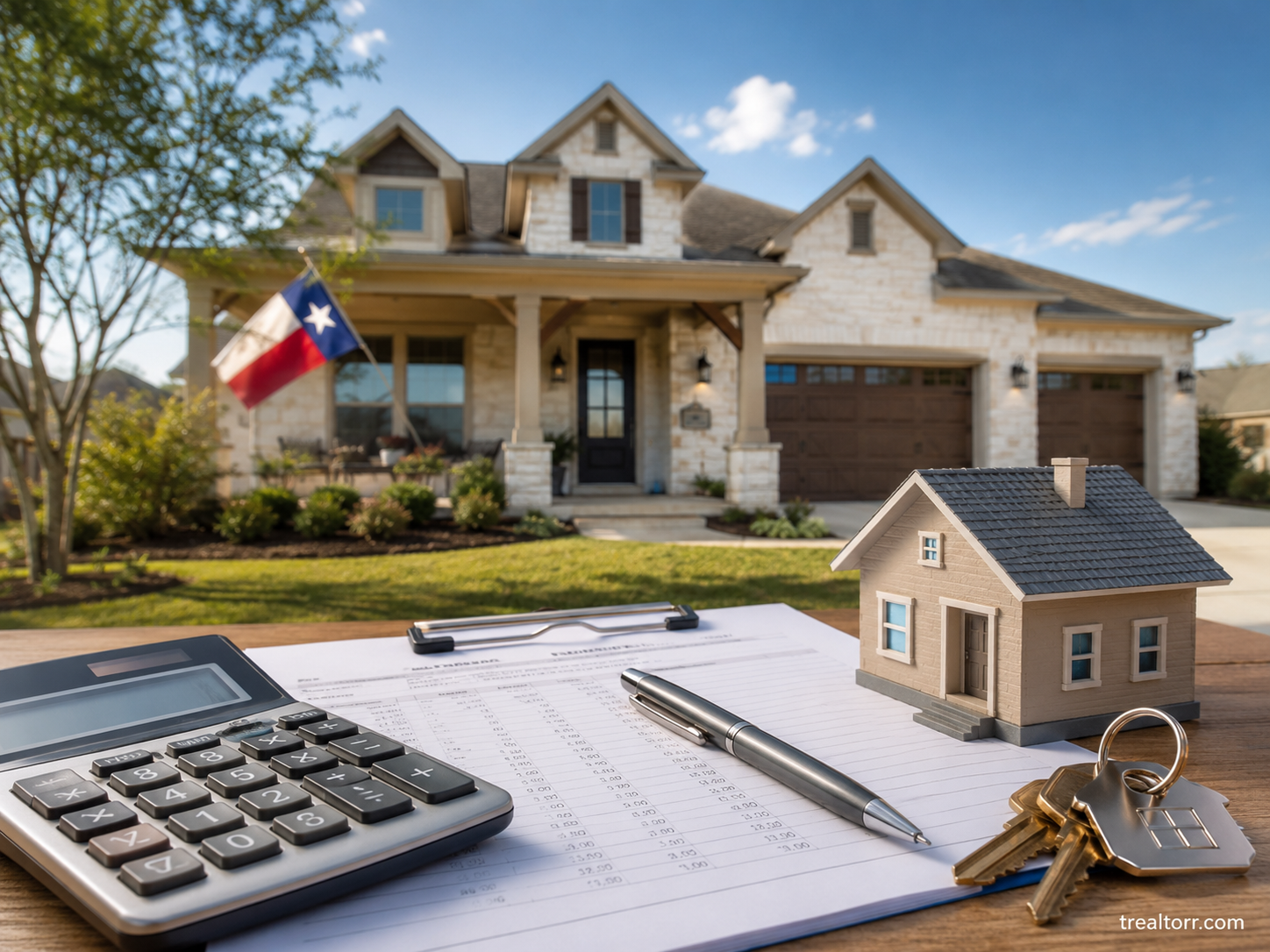
Trying to figure out how much house you can afford in Texas? The answer is not just your salary times a simple number. In Texas, your real home budget depends on mortgage rates, property taxes, homeowners insurance, HOA dues, debt, down payment, and how much breathing room you want after closing.
Here is the honest hook: two buyers with the same income can qualify for completely different home prices in Texas. One buyer with low debt, strong credit, and money saved may afford a comfortable home. Another buyer with car loans, credit cards, high insurance quotes, or very little cash may need to shop much lower even if their salary looks good on paper.
This guide gives you a practical Texas affordability method, example home prices by income, monthly payment breakdowns, graphs, tables, and the hidden costs buyers forget before they fall in love with a house.
Quick Answer: How Much House Can You Afford in Texas?
As a smart starting point, many Texas buyers should aim for a monthly housing payment that keeps their total debt-to-income ratio around 36% or less. Some loan programs and lenders may allow higher, but “approved” does not always mean “comfortable.”
Using example assumptions of a 30-year mortgage, 5% down, Texas property taxes, average insurance, estimated PMI, and a small HOA estimate, a buyer with no other monthly debts may afford approximately:
- $60,000 income: about $190,000 to $240,000
- $75,000 income: about $250,000 to $310,000
- $90,000 income: about $310,000 to $380,000
- $120,000 income: about $430,000 to $520,000
- $150,000 income: about $550,000 to $660,000
The lower number is the more comfortable estimate. The higher number is closer to a stretch or lender-maximum estimate and may feel tight once you add utilities, repairs, furniture, commuting, childcare, savings, and emergencies.
The Texas Affordability Formula
The cleanest way to estimate affordability is to start with your monthly income and subtract your existing debts before you shop for homes.
Step 1: Gross monthly income × target debt-to-income ratio = total monthly debt budget
Step 2: Total monthly debt budget − current monthly debts = estimated housing budget
Step 3: Housing budget must cover principal, interest, property taxes, homeowners insurance, mortgage insurance, HOA dues, and possible MUD/PID costs.
For example, if your household makes $90,000 per year, your gross monthly income is $7,500. If you use a conservative 36% total debt target, your total monthly debt budget is about $2,700. If you already pay $500 per month toward a car loan, student loan, credit cards, or personal loan, your estimated housing budget drops to about $2,200.
That is why debt matters so much. Your income helps you qualify, but your monthly debts can quietly shrink your buying power.
Example Texas Home Affordability by Income
The table below uses example assumptions: 30-year fixed mortgage, 5% down, 6.47% interest rate, 1.40% property tax estimate, $3,506 annual homeowners insurance estimate, 0.55% PMI estimate, and $50 monthly HOA estimate. Real numbers vary by credit score, county, property, insurance quote, loan program, lender, and market conditions.
| Annual Household Income | Gross Monthly Income | Comfortable Estimate Around 36% DTI | Stretch Estimate Around 43% DTI | Best Use of This Range |
|---|---|---|---|---|
| $60,000 | $5,000 | $192,000 | $238,000 | Starter home, smaller city, condo, or lower-tax area |
| $75,000 | $6,250 | $251,000 | $309,000 | Entry-level single-family home in many Texas markets |
| $90,000 | $7,500 | $311,000 | $380,000 | Moderate Texas home budget if other debt is controlled |
| $120,000 | $10,000 | $429,000 | $522,000 | More flexibility in DFW, Houston, San Antonio, and suburbs |
| $150,000 | $12,500 | $548,000 | $663,000 | Higher-end suburban home, larger home, or stronger cash cushion |
Important: these estimates assume no other monthly debts. If you have car payments, credit card minimums, student loans, personal loans, child support, or other recurring debt, your affordable home price may be much lower.
Graph: Comfortable Texas Home Price Estimate by Income
Based on the example assumptions above and no other monthly debts.
Why Texas Feels Different: Taxes and Insurance Change the Math
In Texas, many buyers focus on the purchase price and interest rate, but the monthly payment can jump because of property taxes and homeowners insurance. Texas has no state income tax, but property taxes are a serious part of the monthly payment. Insurance can also be expensive depending on location, roof age, claims history, wind/hail risk, coverage amount, and insurer appetite.
That means a $350,000 home in Texas may not feel like a $350,000 home in another state. The principal and interest are only one piece of the payment. Your lender will usually look at the full housing payment, often called PITI: principal, interest, taxes, and insurance. If you put less than 20% down, mortgage insurance may also be part of the payment.
Example Monthly Payment on a $350,000 Texas Home
Here is a sample monthly payment for a $350,000 Texas home using a 5% down payment and the same assumptions above. This is not a quote; it is a planning example.
| Payment Item | Estimated Monthly Cost | Why It Matters |
|---|---|---|
| Principal and interest | $2,095 | The actual mortgage payment on the loan balance |
| Property taxes | $408 | Texas property taxes can be one of the biggest payment drivers |
| Homeowners insurance | $292 | Insurance varies heavily by city, roof, coverage, and risk |
| PMI estimate | $152 | Often required when putting less than 20% down on a conventional loan |
| HOA/dues estimate | $50 | Some neighborhoods have much higher monthly dues |
| Estimated total monthly payment | $2,998 | This is the number that matters for real affordability |
Graph: Estimated Monthly Payment Breakdown on a $350,000 Texas Home
How Debt Changes How Much House You Can Afford
This is the part many affordability calculators do not explain well. A buyer with $75,000 income and no debt may be able to shop near the mid-$200,000s comfortably. But if that same buyer has $1,500 in monthly debt payments, the comfortable home price can fall dramatically.
| Income | Monthly Non-Housing Debt | Comfortable Housing Budget | Comfortable Home Price Estimate | Stretch Home Price Estimate |
|---|---|---|---|---|
| $75,000 | $0 | $2,250/mo | $251,000 | $309,000 |
| $75,000 | $500 | $1,750/mo | $186,000 | $243,000 |
| $75,000 | $1,500 | $750/mo | $54,000 | $111,000 |
| $90,000 | $500 | $2,200/mo | $245,000 | $314,000 |
| $120,000 | $1,500 | $2,100/mo | $232,000 | $324,000 |
| $120,000 | $2,133 | $1,467/mo | $148,000 | $240,000 |
Big lesson: before you blame home prices, look at monthly debt. Paying down credit cards, reducing car payments, or refinancing expensive debt can sometimes increase buying power more than saving a slightly bigger down payment.
What Salary Do You Need for Common Texas Home Prices?
Using the same example assumptions and no other monthly debts, here is the approximate income needed for common Texas purchase prices.
| Home Price | Estimated Monthly Payment | Income Needed at 36% DTI | Income Needed at 43% DTI |
|---|---|---|---|
| $250,000 | $2,239/mo | $74,600/year | $62,500/year |
| $300,000 | $2,619/mo | $87,300/year | $73,100/year |
| $350,000 | $2,998/mo | $99,900/year | $83,700/year |
| $400,000 | $3,377/mo | $112,600/year | $94,300/year |
| $500,000 | $4,136/mo | $137,900/year | $115,400/year |
If you have other monthly debts, add those debts to the monthly payment before estimating income needed.
Do Not Forget Cash to Close
Monthly payment is only half the story. You also need enough cash to close. In Texas, cash to close may include down payment, closing costs, prepaid taxes, prepaid insurance, escrow setup, lender fees, title fees, appraisal, survey, inspection, and sometimes HOA transfer or resale certificate fees.
Example cash needed on a $300,000 home
| Loan Type / Down Payment | Down Payment Estimate | Possible Closing Cost Range | Estimated Cash Planning Range |
|---|---|---|---|
| Conventional 3% down | $9,000 | $6,000–$12,000 | $15,000–$21,000 |
| Conventional 5% down | $15,000 | $6,000–$12,000 | $21,000–$27,000 |
| FHA 3.5% down | $10,500 | $6,000–$12,000 | $16,500–$22,500 |
| VA eligible buyer | $0 possible | $6,000–$12,000 | Varies by funding fee, seller credits, and eligibility |
| USDA eligible buyer | $0 possible | $6,000–$12,000 | Varies by property location, income, and program rules |
Seller concessions, lender credits, builder incentives, and down payment assistance can reduce cash needed, but they do not erase affordability. A low-cash purchase can still become expensive if the monthly payment is too high.
Loan Options That Affect Affordability in Texas
Conventional loans
Conventional loans can work well for buyers with stronger credit, stable income, and a down payment of 3%, 5%, 10%, or 20%. Putting 20% down can remove PMI, but many buyers purchase with less and refinance or remove PMI later when eligible.
FHA loans
FHA loans can be helpful for buyers with lower credit scores or smaller down payments. FHA may allow 3.5% down for qualified borrowers. FHA loan limits vary by Texas county, so buyers should check the specific county before shopping.
VA loans
VA loans can be powerful for eligible veterans, service members, and surviving spouses. They may allow zero down payment, but buyers should still budget for closing costs, inspections, insurance, taxes, and the VA funding fee unless exempt.
USDA loans
USDA loans can help eligible buyers purchase in qualified rural or suburban areas with zero down payment. However, property eligibility and income limits apply, so the address and household income matter.
Down payment assistance
Texas buyers may be able to use city, county, state, employer, or lender assistance programs. These programs can help with down payment or closing costs, but they may have income limits, credit requirements, purchase price limits, location rules, or repayment rules.
The “Smart Affordability” Checklist for Texas Buyers
Before you decide your price range, use this checklist:
- Check your real monthly debts: credit cards, car loans, student loans, personal loans, child support, and installment plans.
- Estimate the full payment: principal, interest, taxes, insurance, PMI, HOA, MUD, and PID.
- Get an insurance quote early: do not wait until the last week before closing.
- Review property taxes by county and city: tax rates can vary widely between neighborhoods.
- Ask about MUD and PID fees: some newer communities have extra taxes or assessments.
- Keep emergency savings: owning a home without cash reserves is stressful.
- Budget for repairs: roof, HVAC, plumbing, appliances, fencing, and foundation issues can be expensive in Texas.
- Do not max out just because a lender approves it: approval is not the same as peace of mind.
So, Can You Afford a House in Texas?
You can probably afford a house in Texas if your monthly payment fits your income, your debts are controlled, your credit is strong enough for the loan program, and you still have savings after closing. But the right home price is not always the highest number on your pre-approval letter.
A better question is: What payment lets me buy the house, keep it, maintain it, and still live my life?
For many Texas buyers, the safest answer is to shop below the maximum approval amount, compare taxes and insurance before making an offer, and get fully pre-approved before falling in love with a property.
Need a Texas Home Affordability Review?
If you are trying to buy a home in Texas, the smartest first step is not guessing from an online calculator. It is reviewing your income, debts, credit, down payment, target city, and estimated monthly payment before you shop.
Call or text: +1 (347) 831-6085
Ask for: a Texas affordability check, monthly payment estimate, and pre-approval game plan.
FAQ: How Much House Can I Afford in Texas?
Can I afford a $300,000 house in Texas?
Using the example assumptions in this guide, a $300,000 Texas home may have an estimated monthly payment around $2,619 with 5% down. A comfortable income estimate with no other debt is about $87,300 per year at a 36% DTI target. If you have monthly debt, you may need more income or a lower purchase price.
Can I afford a $350,000 house in Texas?
A $350,000 Texas home may have an estimated monthly payment around $2,998 with 5% down under the assumptions used here. A comfortable income estimate with no other debt is about $99,900 per year. At a stretchier 43% DTI, the income estimate is about $83,700, but that may feel tight for many households.
Why is my Texas payment higher than I expected?
The most common reasons are property taxes, homeowners insurance, PMI, HOA dues, MUD taxes, PID assessments, or a higher interest rate than expected. Many buyers only calculate principal and interest, then get surprised by the full escrow payment.
Is it better to put 5% down or 20% down?
Putting 20% down can lower the payment and may remove PMI, but it is not always realistic or necessary. A smaller down payment can help you buy sooner, but you should compare the higher monthly payment, PMI, cash reserves, and long-term goals.
What is the safest home budget?
The safest home budget is usually the one that leaves room for savings, repairs, utilities, groceries, transportation, childcare, emergencies, and life. A lender may approve a higher payment than you personally want to carry every month.
Conclusion
How much house you can afford in Texas depends on more than income. Your true price range comes from your full monthly payment, existing debts, down payment, credit, taxes, insurance, and comfort level. Texas buyers should pay extra attention to property taxes and homeowners insurance because both can significantly change the payment.
If you want a smart Texas home budget, start with the payment you can comfortably handle, not the biggest home price you can technically qualify for. Then compare homes by total monthly cost, not just list price. That approach can help you buy with confidence instead of becoming house poor.
Sources and Assumptions
- Mortgage rate assumption based on Freddie Mac Primary Mortgage Market Survey: https://www.freddiemac.com/pmms
- Texas homeowners insurance average premium based on Texas Department of Insurance market overview: https://www.tdi.texas.gov/general/texas-homeowners-insurance-market-overview.html
- Property tax assumption based on Tax Foundation state property tax data: https://taxfoundation.org/data/all/state/property-taxes-by-state-county/
- DTI explanation based on Consumer Financial Protection Bureau guidance: https://www.consumerfinance.gov/ask-cfpb/what-is-a-debt-to-income-ratio-en-1791/
- Conforming loan limit reference: https://singlefamily.fanniemae.com/originating-underwriting/loan-limits
- FHA Texas loan limit reference: https://www.lendingtree.com/home/fha/fha-loan-limits-in-texas/
This article is for educational planning only. It is not a mortgage approval, financial advice, tax advice, or insurance quote. Rates, taxes, insurance premiums, PMI, closing costs, lender guidelines, and loan programs change. Always confirm numbers with a licensed mortgage professional, insurance agent, tax office, and lender before making a purchase decision.
🏡 Get Pre-Approved for a Home Loan
Fast, free, and secure — see how much you qualify for.
Get Pre-Approved