
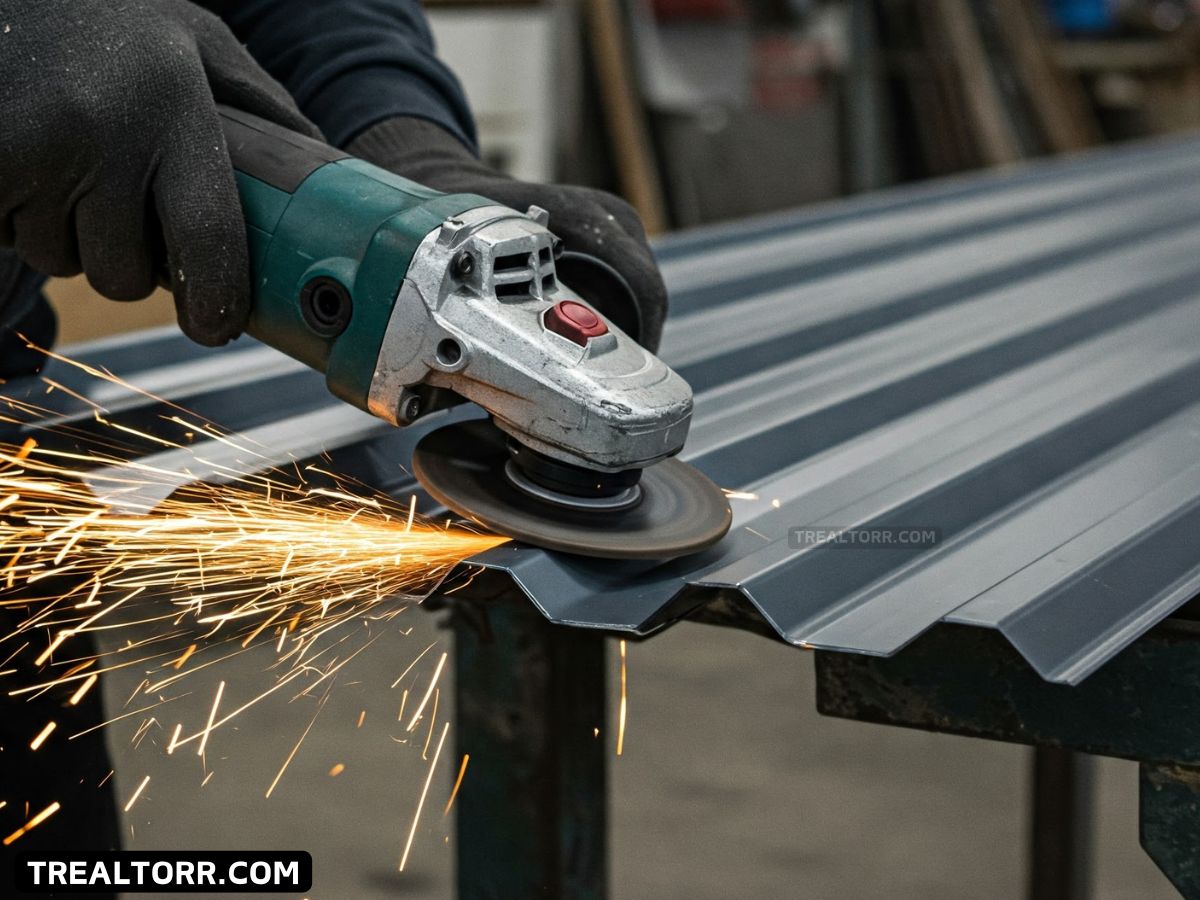
Cutting metal roofing requires careful measuring, the right tool, and proper safety gear.
The goal is to make clean cuts without bending the panels, damaging the protective coating, or leaving sharp edges that can cause injuries.
If you are working on a home improvement project, you may also want to read our guide on easy upgrades that can boost a home’s value.
Tools You May Need
- Measuring tape and marker: For measuring and marking the cut line.
- Straightedge or square: For straight, accurate cuts.
- Clamps: To hold the metal panel steady while cutting.
- Tin snips: Useful for small cuts, trim work, and detailed cuts.
- Electric shears: Good for longer, straighter cuts with less distortion.
- Nibbler: Helpful for curves, corners, and more detailed cuts.
- Circular saw with a metal-cutting blade: Useful for larger sections, but it must be used carefully.
- Metal file: For smoothing sharp edges after cutting.
Always check the roofing manufacturer’s instructions before cutting. Some manufacturers may recommend or discourage certain cutting tools because heat or sparks can damage the panel coating.
If your project involves roof condition, leaks, or major repairs, you may also want to read our article on the benefits and risks of buying a fixer-upper.

Safety Gear
- Safety glasses or face protection
- Cut-resistant gloves
- Long sleeves and work pants
- Hearing protection if using power tools
- Dust mask or respirator if cutting creates dust or fine particles
- Stable work surface and clamps
Metal roofing edges can be extremely sharp. Wear gloves when handling panels, and keep your hands away from the cutting path.
Step 1: Prepare the Workspace
Set up a stable, flat work surface before cutting the metal roofing panel.
Make sure the area is clear of clutter, flammable materials, and tripping hazards. If you are using a saw or grinder, sparks may be created, so keep the area safe and well ventilated.
Clamp the metal panel securely so it does not shift while you cut.
Step 2: Measure and Mark the Cut Line
Use a measuring tape to measure the section that needs to be cut.
Mark the cut line with a marker, chalk, or pencil that shows clearly on the metal surface.
Use a straightedge or square to keep the line accurate. Measure twice before cutting so you do not waste material. Getting precise cuts saves you from costly installation mistakes down the road.
Step 3: Choose the Right Cutting Tool
The best tool depends on the type of cut you need.
| Cut Type | Tool Option | Best For |
|---|---|---|
| Small cuts | Tin snips | Trim work, short cuts, and detail work |
| Long straight cuts | Electric shears | Fast straight lines without curling panels |
| Curves and profiles | Nibbler | Corrugated profiles and tight radii |
| Heavy or stacked sheets | Circular saw with metal blade | Fast straight long cuts through panels |
When selecting a power option such as a circular saw, never use standard wood-cutting blades. Instead, pick a dedicated carbide-tipped or cermet ferrous metal blade with 40 to 60 teeth and a negative rake angle to smoothly slice the material without burning through factory-applied paint coats. Professional roofers can cross-reference physical tool standards and jobsite regulatory guides directly through the Occupational Safety and Health Administration (OSHA) documentation portals to stay fully compliant with structural safety requirements.
Making smart structural modifications handles the physical integrity of your property, but building true equity depends on your funding and long-term asset strategy. Real estate investors looking to balance their renovation costs with tailored leverage can review our breakdown on managing real estate investment loans during economic uncertainty. If you need expert assistance evaluating structural improvements or want to map out your portfolio expansion, feel free to contact us today to consult with our team cleanly!
🏡 Get Pre-Approved for a Home Loan
Fast, free, and secure — see how much you qualify for.
Get Pre-Approved