
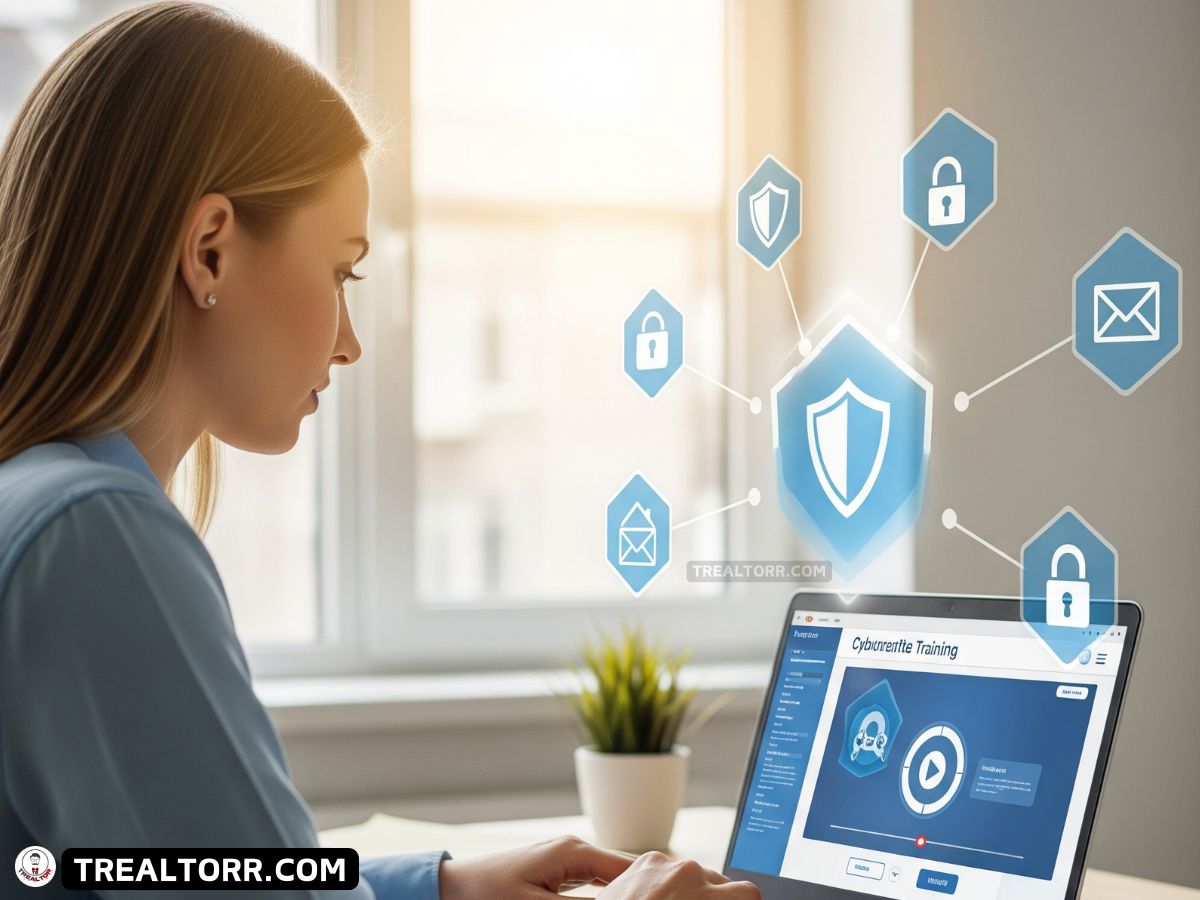
Congrats on stepping into the exciting world of real estate. You’ve got showings, contracts, clients, and deals on your mind — but before you dive too deep, let’s talk about something important that often gets overlooked: cybersecurity training.
If you are just starting your real estate career, you may also want to read our guide on getting a real estate license in New York State.
Why does this matter? Because real estate agents may handle sensitive information like client IDs, bank details, contracts, signatures, and private financial documents.
If that data is not protected, it can get into the wrong hands and create serious problems for both you and your clients.
If you want to understand why this industry is a target, read our article on why real estate is becoming a target for hackers.
Why Cybersecurity Matters for New Agents
Real estate is attractive to hackers because it involves large payments, personal information, wire instructions, contracts, and fast-moving deadlines.
As a new agent, you are part of the front line. Your email, phone, laptop, and transaction tools need to be protected.
Learning cybersecurity basics can help you:
- Protect your clients’ data
- Keep your deals safer
- Build your professional reputation
- Avoid costly mistakes
The FBI explains how business email compromise scams can be used to trick people into sending money to the wrong account.
Where to Start Your Cybersecurity Training
1. Learn About Common Scams
Start by understanding the types of scams real estate agents may face:
- Phishing emails — fake messages that look real but try to steal passwords or personal information
- Wire fraud — scams where criminals send fake payment instructions
- Fake login pages — websites designed to capture your username and password
- Malicious attachments — files that may install malware or steal information
You can also review CISA’s information on how to avoid phishing.
2. Build Strong Password Habits
Passwords are one of your first lines of defense. Weak or reused passwords can make it easier for attackers to break into your accounts.
- Use long, unique passwords for every important account.
- Use a password manager instead of reusing the same password everywhere.
- Turn on two-factor authentication whenever possible.
For more help with account protection, read our article on two-factor authentication in real estate deals.
3. Use Secure Tools and Platforms
Only use trusted tools for real estate work, especially when handling contracts, signatures, payments, and client information.
- Email accounts
- E-signature tools
- CRMs and transaction management systems
- Cloud storage and document sharing tools
Check whether these tools support security features like two-factor authentication, encryption, account alerts, and role-based access.
If your work includes crypto-related real estate deals, you may also want to read our guide on Bitcoin real estate transactions.
4. Be Careful With Public Wi-Fi
Avoid accessing sensitive client files, banking portals, or transaction documents on public Wi-Fi unless you are using a trusted secure connection.
Coffee shops, hotels, airports, and public spaces can be risky places to handle private real estate information.
5. Keep Your Devices Updated
Keep your phone, laptop, tablet, browser, and apps updated. Security updates often fix weaknesses that hackers may try to exploit.
Use screen locks, avoid downloading unknown files, and remove apps you do not use.
CISA also shares guidance on updating software to reduce security risk.
6. Know How to Spot Suspicious Activity
Always double-check wiring instructions by phone using a trusted number. Do not rely only on an email thread for payment instructions.
Do not click strange links, download unexpected attachments, or enter passwords on pages you reached from suspicious emails.
When in doubt, stop and verify with your broker, manager, title company, or IT support before taking action.
If your clients are buying a home, you may also want to send them our guide on common mistakes first-time homebuyers make.
Where to Find Cybersecurity Training Resources
- The National Association of Realtors may offer cybersecurity articles, webinars, and training resources.
- Local real estate boards may host safety and cybersecurity webinars.
- CISA.gov has beginner-friendly cybersecurity resources for individuals and businesses.
- Your brokerage may have required security training, approved tools, and reporting steps.
You can review the National Association of Realtors’ cybersecurity topic page on cybersecurity for real estate professionals.
CISA also provides guidance on multi-factor authentication, which is one of the most important protections for real estate accounts.
Final Thought: Start Smart, Stay Safe
Cybersecurity might feel like a big topic, but starting with small, smart habits can protect you and your clients.
The best agents understand that keeping data safe is part of providing professional service.
You are not just closing deals. You are building trust.
Before your next transaction, turn on 2FA, update your devices, use strong passwords, and learn how to spot suspicious messages.
🏡 Get Pre-Approved for a Home Loan
Fast, free, and secure — see how much you qualify for.
Get Pre-Approved